U.S. Treasury buys up yen in bid to bolster the battered Japanese currency
The move comes after the central bank indicated possible intervention, with an expected announcement likely to serve as a warning against speculation.
Published
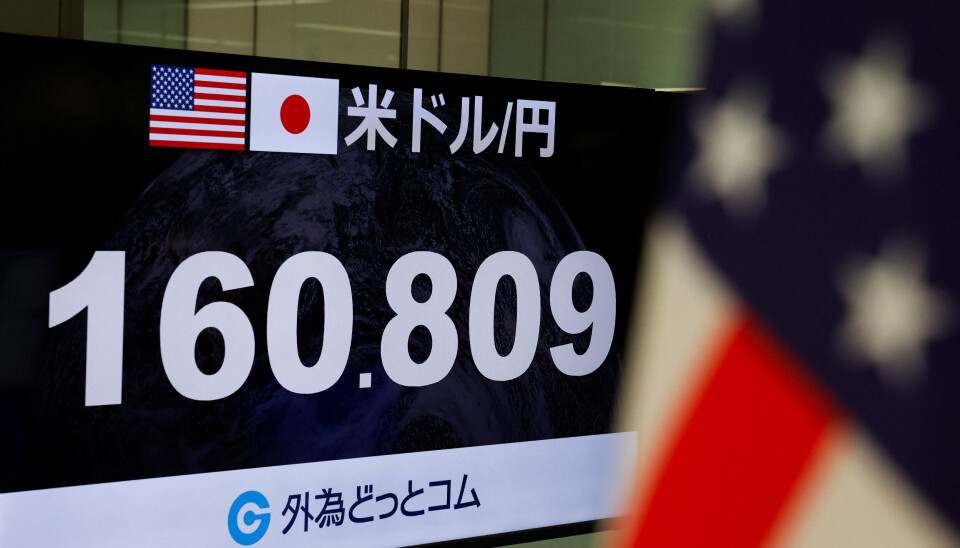
A monitor displays the Japanese Yen exchange rate against the dollar next to a U.S. flag at a dealing room of the foreign exchange trading company Gaitame.com in Tokyo, Japan, on July 31.REUTERS/YONHAP
The U.S. Treasury bought yen on Friday to support the battered Japanese currency, the Financial Times (FT) reported, marking Washington's first yen-buying intervention with Tokyo in more than a decade as it languishes near 40-year lows.
The Federal Reserve Bank of New York sold euros for yen on behalf of the Treasury through Goldman Sachs and Morgan Stanley, the FT said, citing people familiar with the matter. The report did not indicate any amounts of yen purchased.
Earlier on Friday, the Treasury informed a number of banks that it might intervene in the yen market and that they should "stand ready for future action," a source familiar with the matter told Reuters.
A Reuters photo of Treasury Secretary Scott Bessent's notepad during a cabinet meeting at Camp David in Maryland showed the words "To Do," followed by "Buy Japanese Yen (JPY) $5-10 bil."
The Treasury did not immediately respond to requests for comment on the FT report and the Bessent notepad photo. The New York Fed and Morgan Stanley also did not immediately respond to requests for comment outside regular business hours. Goldman Sachs declined to comment.
A notepad in front of U.S. Secretary of the Treasury Scott Bessent reads "To Do Buy Japanese Yen (JPY) $5-10 bil" as he participates in a cabinet meeting at Camp David on July 31. The note, photographed at 11:33 EDT, came after Reuters earlier reported the Treasury had put banks on alert for a possible U.S. intervention in the market for Japan's currency.REUTERS/YONHAP
Japan and the United States may unveil a policy as early as next week to address the yen's weakness, Kyodo News reported on Saturday, citing informed sources.
The announcement would serve as a warning against speculative bets that have pressured the Japanese currency, with the aim of stabilizing markets, the report said.
The United States last directly supported the yen in 2011, coordinating with fellow Group of Seven nations to stabilize markets after Japan's earthquake and tsunami disaster.
News of the potential intervention by the Treasury helped boost the yen, with a notable jump during late afternoon trading. The dollar dropped to about 157.6 yen just before 5 p.m. in New York from about 158.9 yen around 4:14 p.m., LSEG data showed.
The U.S. currency had risen in recent weeks to nearly 164 yen, its highest since 1986.
Monitors display the current Japanese Yen exchange rate against the U.S. dollar at a dealing room of the foreign exchange trading company Gaitame.com in Tokyo, Japan, on July 31.REUTERS/YONHAP
Japan may have sold as much as $58.97 billion to buy yen on Thursday, central bank data indicated on Friday, signaling its repeated efforts to stem the yen's weakness.
Tokyo intervened again in New York trading hours on Friday, the Nikkei reported on Saturday.
Officials from Tokyo's finance ministry could not immediately be reached for comment outside working hours, but the ministry, in an apparent effort to soothe market worries about the limits of Japan's firepower for large-scale intervention, posted on X that Japan's monetary authorities have "a broad range of tools to address market liquidity needs."
"We remain prepared to use available tools as necessary to support orderly market functioning," including potential access to the Federal Reserve's standing Foreign and International Monetary Authorities (FIMA) Repo Facility, the ministry said.
The FIMA repo facility, introduced in 2020 to steady markets during the Covid-19 pandemic, allows Japan to raise dollar liquidity without outright sales of U.S. Treasurys, potentially easing funding pressures on Tokyo for intervention.