The current crisis illustrates a familiar pattern: those with fewer resources move to survive, while those with greater wealth move to preserve and expand.
While internal power struggles are not unusual in political parties, there are growing concerns that such conflicts should not overshadow the responsibilities of a governing party tasked with managing national affairs.
If crimes involving those in power go unpunished, it undermines democracy. A system in which the powerful escape accountability erodes public trust in the judiciary.
Universal values cannot be sustained by power alone. Without shared understanding and cooperation, no global standard can endure. Empires lacking such foundations tend to decline more rapidly than they rise.
Korean architecture has long valued relationships over display. The hierarchy of spaces, harmony with nature and careful use of boundaries have shaped its distinctive order.
A recent public opinion survey by the Asan Institute for Policy Studies offers a revealing snapshot of Korean perceptions of foreign relations, with particularly notable shifts in attitudes toward Japan and the United States.
Ironically, members of the Democratic Party seem convinced of President Lee's guilt. In their view, if the trial proceeds, a guilty verdict is inevitable.
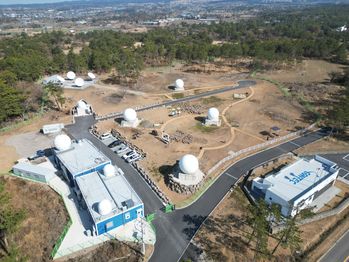
Space is arriving in Jeju, long known primarily as a tourist destination. Jeju now hosts a growing network of space-related institutions.
The era of frictionless free trade is ending. In a world where every connection can carry both cost and strategic risk, countries with limited natural resources face difficult choices.
In an era defined by hybrid warfare, the question remains what preparations Korea is making to meet these evolving challenges.
Korea JoongAng Daily Sitemap