Global memory chip shortage fuels race between Korea, the United States and China
Micron’s Japan expansion, Korea’s massive fab plan and China’s rapid gains show how AI-driven memory shortages are turning chip investment into a geopolitical competition.
The Micron logo is shown in this illustration from June 11.REUTERS/YONHAP
A deepening memory-chip shortage, fed by a surge in AI infrastructure spending, has ignited a capacity race among the world's three largest memory makers, and it is quickly hardening into a contest between nations as Korea, the United States and China all pile in.
The latest move came on Saturday, when Micron Technology, the world's third-largest memory maker, broke ground on an expansion of its Hiroshima, Japan, plant to produce advanced chips, including next-generation high bandwidth memory, or HBM.
The total investment runs to 1.5 trillion yen ($9.2 billion), and the Japanese government is backing it with up to 500 billion yen in subsidies, a sign of how far governments will go to lock in chip supply. The advanced HBM made there is set to ship to Nvidia and other customers starting in the summer of 2028.
Sanjay Mehrotra, Micron's chief executive, hailed the tie-up at the groundbreaking.
"When American boldness meets Japanese craftsmanship, you do not get a compromise," Mehrotra said.
Chipmakers are racing to add capacity because supply cannot keep pace with runaway AI demand. Semiconductor Equipment and Materials International, an industry association for chip equipment and materials, projects that memory-making capacity will grow around 19 percent a year but still fall short of AI-driven demand, so shortages in memory for laptops, cars and home appliances will persist for some time.
Korea's two memory champions are answering with a build out of their own. On June 29, Samsung Electronics and SK hynix, the world's No. 1 and No. 2 memory makers, said they would build four new chip fabs worth some 800 trillion won ($523 billion) in the country's southwest.
President Lee Jae Myung, who unveiled the plan, framed it as a fight between nations.
"This is a contest between countries, one that combines astronomical corporate investment with government support," Lee Jae Myung said June 29. "A speed war is the only way to survive."
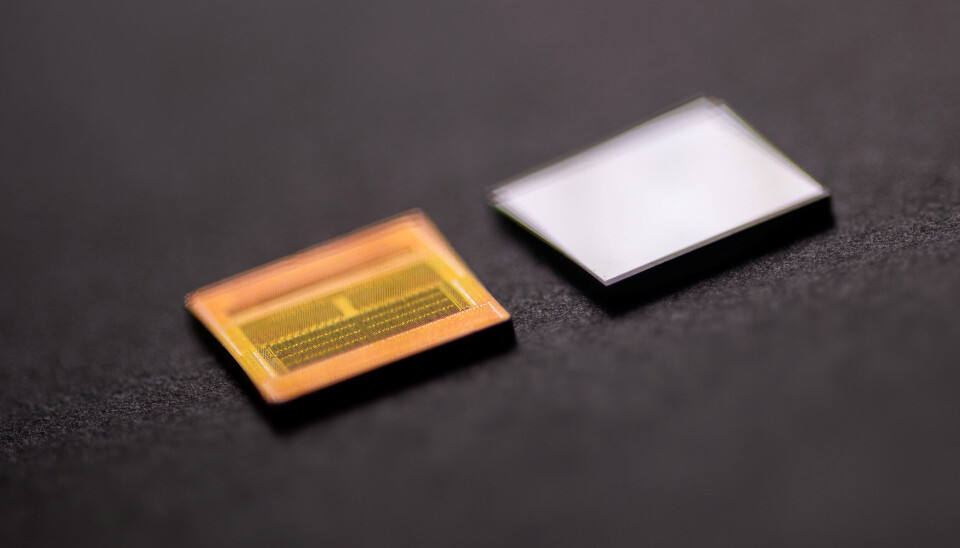
A highest-capacity, high-bandwidth 16-High HBM3E memory chip from SK hynix is seen in this studio photograph in San Francisco on Aug. 6, 2025.REUTERS/YONHAP
China, with the strong backing of its government, is closing in fast. Reuters has reported that ChangXin Memory Technologies (CXMT), the country's largest DRAM maker, will double its wafer output through a new plant in Shanghai and other additions. As memory prices climb, big technology firms are eyeing Chinese supply, with Apple in talks to buy memory for its China-market devices from CXMT and others.
The rise is real. Kyung Kye-hyun, a Samsung Electronics adviser and former head of its chip business, sounded the alarm in May.
"Chinese companies' expanding production capacity could send their global market share soaring to 12 to 13 percent, which is a worrying situation," Kyung said.
The numbers back that up. Counterpoint Research put CXMT's share of the global DRAM and HBM market at 8 percent in the first quarter, up from 3 percent a year earlier.
Still, a building spree is no guarantee of a lasting boom. Because a chip fab typically takes more than three years from groundbreaking to mass production, much of the capacity now going up could hit the market at once around 2028 and raise the risk of a glut.
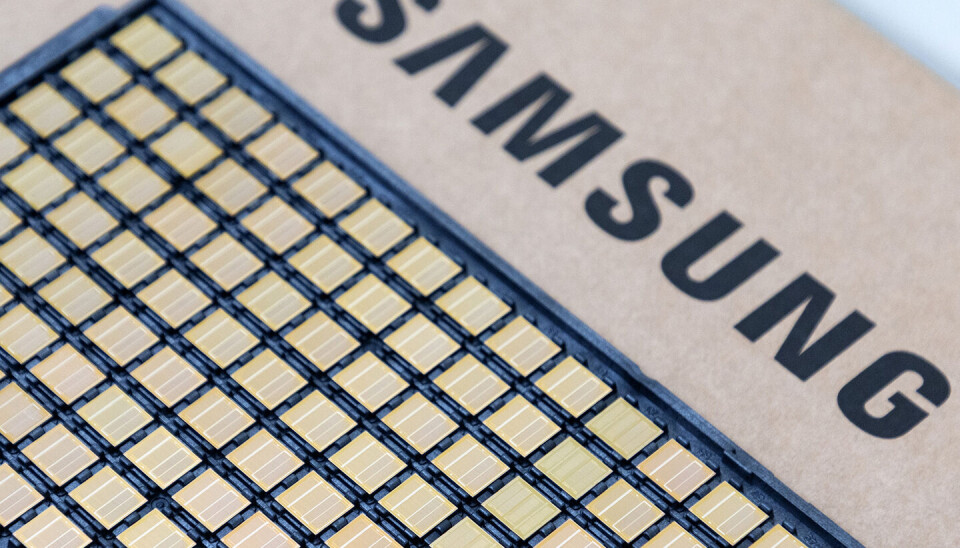
Samsung Electronics' sixth-generation high bandwidth memory (HBM4) chips that has begun shipments to the company's key customers since February.SAMSUNG ELECTRONICS
One hedge gaining ground in the memory business is the Strategic Customer Agreement. These deals carry a "take-or-pay" clause: a buyer pays a set amount whether or not it takes the full committed volume. The arrangement shares the price and volume risk that suppliers once shouldered alone.
Lee Eun-taek, an analyst at KB Securities, said the balance of risk is shifting.
"In the past, when the market turned, customers would delay shipments and most of the risk fell on suppliers, but the structure is changing so that customers share the risk on memory prices and volumes," the analyst said. "Still, if the AI investment cycle slows much more than expected, we will have to watch how well these contracts actually hold up in the market."
This article was originally written in Korean and translated by a bilingual reporter with the help of generative AI tools. It was then edited by a native English-speaking editor. All AI-assisted translations are reviewed and refined by our newsroom.